Why Your AI Video Looks AI: The Craft Gap Nobody Talks About
There is a tell. Marketers who work in video know it the moment they see it. The motion is slightly too smooth. The lighting is technically correct but emotionally empty. The faces are beautiful and completely untrustworthy. The edit holds beats that no human editor would hold.
AI-generated video is arriving fast, and most of it looks exactly like what it is.
That is not an argument against using AI in production. It is an argument for understanding where the craft gap actually lives, because it is not where most teams are looking.
The Mistake Is Treating AI as a Replacement for Creative Decisions
The brands getting burned are the ones handing prompts to a generative model and calling the output a deliverable. They are solving a speed problem and accidentally creating a credibility problem.
The brands getting results are treating AI as a production layer, not a creative layer. They are still making the hard creative decisions upstream, before a single frame is generated. The AI is executing those decisions at scale and speed. The human craft is happening earlier in the process, not disappearing from it.
This distinction sounds simple. In practice, most production pipelines are not built around it.
Where the Craft Gap Actually Lives
When AI video underperforms for a brand, the failure is almost never the technology. It is one of three upstream problems.
Art direction that was never resolved before generation
A prompt is not an art direction brief. If your team cannot describe the specific visual world of your brand in concrete, defensible terms, the model will fill the gaps with the average of everything it has ever seen. Average is the enemy of distinctive brand identity. You get a video that looks polished and looks like everyone else's video.
Closing this gap means doing the art direction work first. Define the color temperature, the depth of field philosophy, the casting archetype, the lighting mood, the negative space behavior. Build those inputs before you build the prompt.
Motion and editing logic borrowed from generic templates
AI video tools have default motion behaviors. Default eases, default transitions, default pacing. Left unmodified, those defaults produce content that reads as template-built to any trained eye. It is the visual equivalent of a presentation slide with the default font and default bullet points.
Editors who work in AI-augmented production need to actively override defaults. Cut against the motion. Use stillness where the tool wants movement. Introduce irregular rhythm where the system prefers smooth cadence. The edit is still an editorial voice, even when the footage was generated rather than shot.
Sound design that was never scoped
This is the most common omission. Teams invest in the visual generation and treat audio as an afterthought. But in a commercial context, sound design is doing thirty to forty percent of the emotional work. A generated visual with placeholder audio feels unfinished to a viewer who could not tell you why. They just know something is off.
AI video production needs a sound design brief from the start. Not a music track dropped on at the end. A designed audio world that matches the visual choices.
Regional Craft Considerations for Southeast Asian Markets
Southeast Asian audiences are visually literate and brand-savvy. The campaigns that perform in this market tend to carry a cultural texture that synthetic defaults do not produce automatically.
A few production considerations worth building into your AI workflow if you are producing for Singapore, Thailand, Vietnam, Indonesia, or the Philippines:
- Casting archetype decisions matter significantly. Faces that feel culturally grounded, not generically pan-Asian, read as more trustworthy to local audiences.
- Ambient environmental texture, the specific light quality of an equatorial afternoon, the density of a wet market, the particular colors of regional architecture, these are differentiators that require deliberate prompt engineering and usually human refinement passes.
- Pacing conventions differ across the region. What reads as confident restraint in a Singapore B2B context reads as slow in an Indonesian social feed. Building market-specific edit cuts from the same generated source material is one of the stronger arguments for AI production efficiency, but only if the source material is strong enough to cut multiple ways.
How Production-First Studios Are Structuring the Workflow
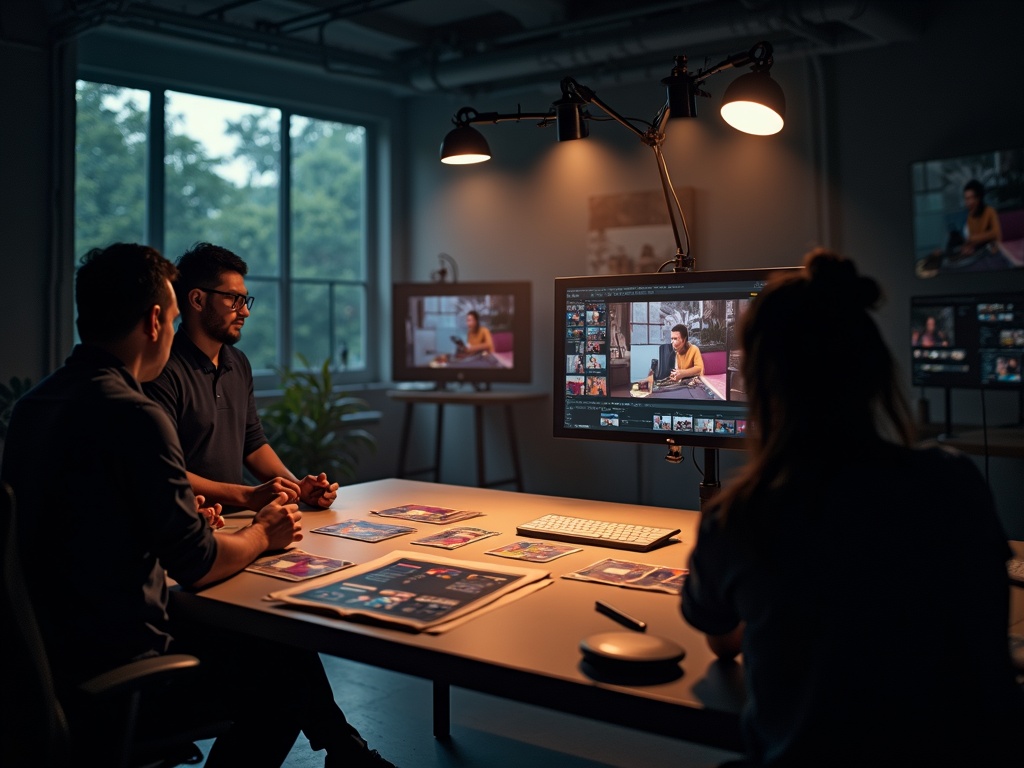
The teams producing the most commercially convincing AI video are running a hybrid structure. Experienced creative directors, art directors, and editors are working upstream and downstream of the generation step. The middle, the actual generation, is the accelerated part. The human craft work at either end has not shrunk, it has shifted.
A campaign that might have taken four weeks of production and post is now running in ten days. But those ten days contain the same density of creative decision-making as the four weeks did. The decisions are just compressed and front-loaded.
Studios like Glory Forest have been building production pipelines around this hybrid model, treating generative tools as a production resource that requires the same creative governance as a camera crew or an edit suite.
The Output That Earns Trust
There is a version of AI video that earns audience trust. It exists. It is in market right now and it is performing. The common thread across those pieces is not a superior tool or a better model. It is creative direction that was clear before the first frame was generated, and craft attention that carried through to the final mix.
The craft gap in AI video is closeable. But you close it by doing more creative work upstream, not less. The brands that understand that are the ones who will stop producing content that looks AI and start producing content that looks like theirs.