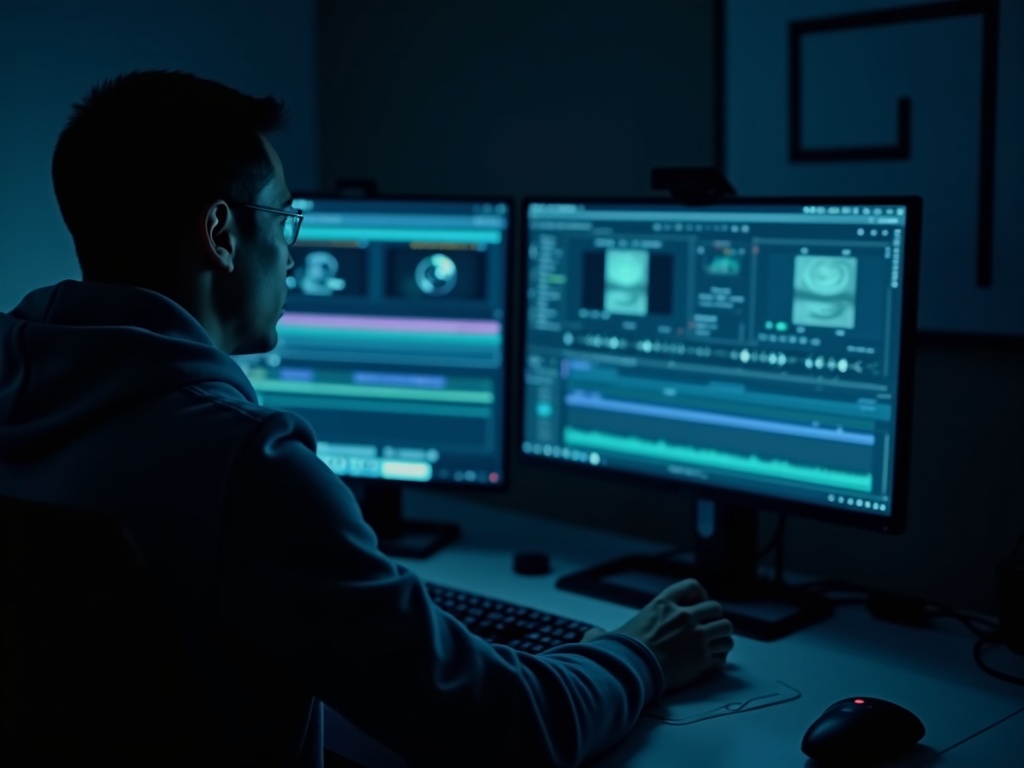
Editing a 60-Second Brand Film: Rhythm, Sound and the Cut
A 60-second brand film is not a 120-second film cut in half. It is not a 30-second film given more breathing room. It is its own form — one with a specific gravity, rhythm, and purpose that most production teams underestimate until they are three weeks into post-production, panic-cutting footage, and realizing they shot the wrong thing.
The constraint is the point. Sixty seconds is long enough to tell a story with stakes and character. It is short enough that every frame must earn its place. There is no room for filler, for "we'll figure it out in the colour grade," for hoping the music will carry a weak sequence.
This is where most brand films fail. They are shot generously — multiple takes, multiple angles, plenty of coverage — but edited timidly. The producer and the creative director argue over whether to cut a shot that "cost us money to shoot." The editor tries to fit everything in. The music supervisor layered the track too thick. And the result is a film that feels bloated, one that the viewer scrolls past in the first three seconds because nothing has grabbed them yet.
The Math of 60 Seconds
Let's be precise about what you actually have.
At 23.976 frames per second, 60 seconds is 1438 frames. If your average shot length is 2 seconds, you have roughly 30 shots to work with. If it is 3 seconds, you have 20. This number determines everything about how a film *moves* — whether it feels contemplative or urgent, controlled or kinetic.
Most commercial productions default to 2.5-second shot lengths without thinking. This is the rhythm of network television, born from decades of 30-second spot making. It works. But it is not inevitable. A 60-second brand film can breathe differently.
Some of the most effective brand films hold single shots for 4, 5, even 8 seconds. They let tension build. They trust the viewer's attention. This is a fundamental editorial choice that should be made in pre-production, not discovered by accident in the edit suite.
Decide early:
- Are you building toward a reveal, or sustaining a mood throughout?
- Is this film arc-based (something changes) or state-based (we arrive somewhere and stay there)?
- Will dialogue anchor the pacing, or will music and natural sound drive the rhythm?
These decisions reshape how you shoot. They change what coverage you need. They determine whether your 60 seconds feels claustrophobic or spacious.
The First Five Seconds Are Everything
A brand film succeeds or fails in the opening beat. This is not opinion — it is how attention works now. If your first shot is generic, your viewer has moved on. If it is ambiguous in a way that requires explanation, you have lost narrative momentum before you have started.
The strongest opening shots do one of three things:
- They show something unexpected (not shock value, but genuine surprise within the world of the film)
- They introduce a recognizable human truth (someone experiencing something the viewer has experienced)
- They establish a visual world so distinct that curiosity pulls the viewer forward
The weakest openings hedge. They show your logo. They open on a wide shot "establishing" the scene. They begin with a voice-over that sounds like an explanation rather than a character speaking to someone.
In those first five seconds, you are not selling the product. You are making a bargain with the viewer: *stay for the next 55 seconds, and something will be worth your time*.
The Edit Bay Mentality
The difference between a good 60-second brand film and a great one often comes down to editorial discipline, which is not the same as speed or efficiency. It means being willing to cut shots that are beautiful but redundant. It means resisting the pressure to "show the whole product" when showing one perfect detail would be more powerful.
The producer watches the director's cut and says, "We need to show this feature." The creative director says, "We need to show what it *feels* like to use this feature." These are different things. A feature is functional. A feeling is what makes someone care enough to act.
This is where the relationship between the editor and the creative leadership matters. A good editor is not a technician who executes instructions. They are a storyteller who points out when a sequence is not working and proposes alternatives. They notice when a film has one idea too many. They recognize when a cut can be tightened by a frame or two, making the rhythm snap.
This conversation happens in the edit bay. It requires trust and a shared understanding of what the film is trying to do.
Sound and Picture Work Together
Most teams treat sound as something that comes last — a layer applied to picture. In a 60-second film, sound and picture are locked together from the edit forward. They are not separate tracks that happen to overlap.
Decide early whether the film's rhythm is driven by dialogue, music, or natural sound. This choice shapes the cut. A film paced to music behaves differently than one paced to a speech or ambient sound. The music will dictate where you can cut. Dialogue will require you to protect certain shots to land emotional beats. Natural sound (footsteps, a door closing, pages turning) requires precise timing and often means holding on images slightly longer than you might otherwise.
The best 60-second brand films treat the sound mix as an editorial tool, not an afterthought.
The Final Metric
Before you lock the edit, ask yourself: *Does this film do exactly one thing really well?*
Not three things adequately. Not a complete product tour that touches on every feature. One thing. Maybe it establishes that a brand understands your problem. Maybe it shows the moment when the product changes your morning. Maybe it introduces a visual identity so strong that you remember it.
A 60-second film with a single, clear purpose will outperform a 60-second film that tries to do everything. The viewer remembers it. They share it. They want to know more.
This is the craft. Not the production budget, not the equipment, not the location. It is the clarity of editorial vision and the discipline to execute it. When you work with a production partner — whether in-house or external — this is what you should be evaluating: not how many shots they got, but how ruthlessly they are willing to cut the ones that do not serve the film.
That is what separates a brand film from a commercial. One is trying to say something. The other is just trying to fit everything in.