??Back to Blog
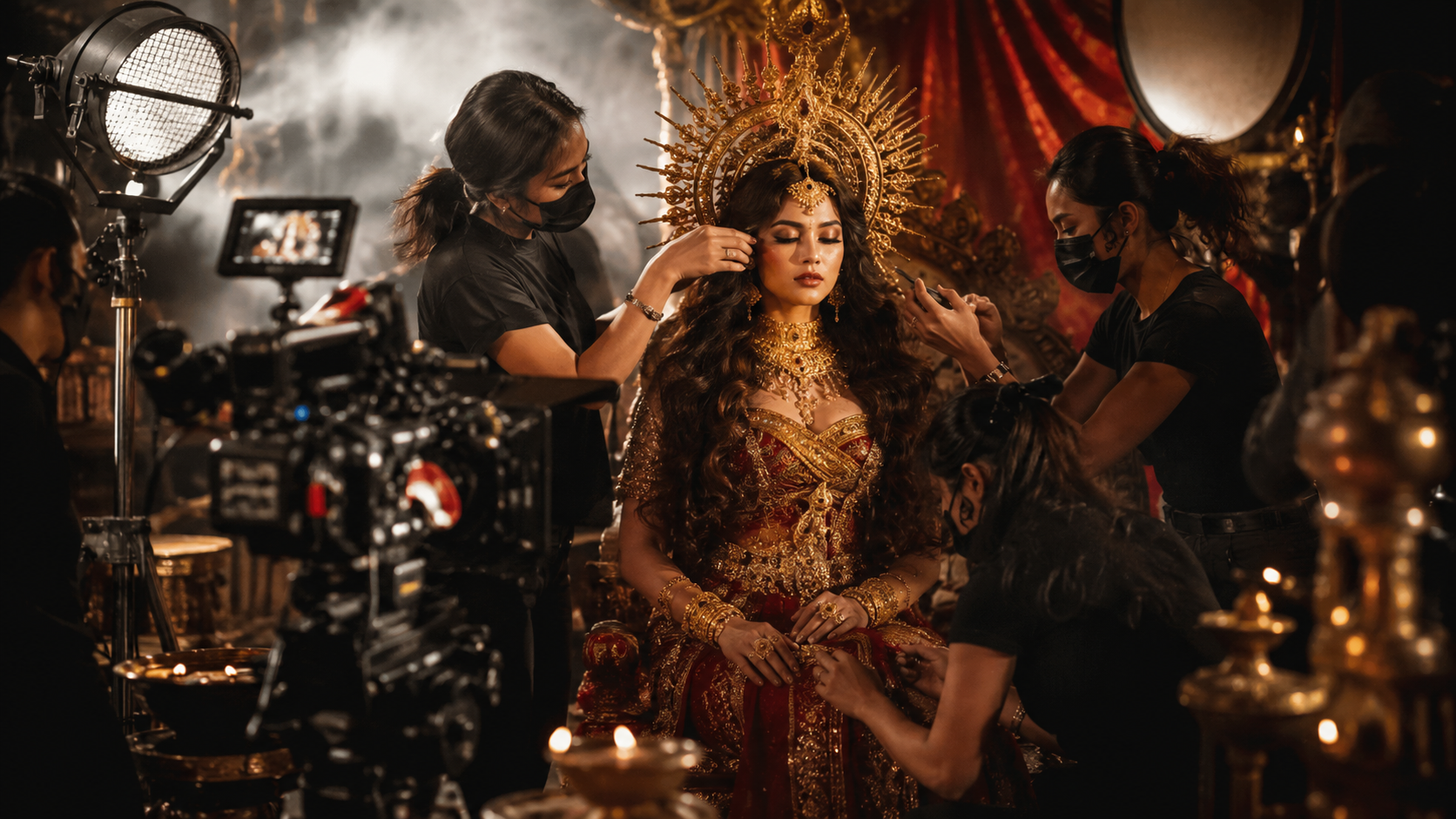
Goddess Transformation is one of our most-shared pieces ??a sequence where a woman undergoes a divine transformation surrounded by elemental fire, light, and particle effects. It looks like it came from a Hollywood VFX house. It didn't. Here's exactly how we made it.
40+
Generation iterations
The concept
The brief was open ??we wanted to create something that demonstrated the upper limit of what AI special effects could achieve for a brand or entertainment context. The concept of a divine feminine transformation felt right: it's visually spectacular, culturally resonant across Asian markets, and technically demanding in ways that showcase what the tools can do.
We started with a reference mood board pulling from traditional Chinese deity imagery, Indian classical dance, and contemporary VFX sequences from films like Doctor Strange and Everything Everywhere All at Once. The goal was something that felt simultaneously ancient and futuristic.
The production process
01
Base character generation
We used Seedance 2.0 to establish the character's appearance ??face, costume, posture, lighting. This took around 15 iterations to get a result we were happy with. The key was being extremely specific about lighting direction and fabric texture in the prompt.
02
Motion generation
Once we had a strong base frame, we used it as a reference image to generate motion. The transformation sequence ??where the character's form expands into light and fire ??required multiple generation passes to get the motion to feel like a true transformation rather than just a camera move.
03
Particle and VFX layering
The particle effects ??the sparks, embers, and light rays ??were generated separately and composited in post. Prompting for particles works best when you describe them physically: "dense golden embers rising in slow motion" produces better results than "fire effects."
04
Colour and post-production
The final grade pushed the piece into a high-contrast orange-and-teal palette that made the divine elements feel more otherworldly. We added a subtle film grain and reduced the digital sharpness to give it a more cinematic, less "AI-generated" feel.
The prompts that worked
Prompt craft is where most AI video attempts fall short. Here are the actual prompt structures we used for the key sequences:
Base character prompt
"Ancient Chinese goddess, golden ceremonial robes with intricate embroidery, soft frontal rim lighting, dark atmospheric background, ultra-detailed fabric, cinematic composition, medium shot, static camera, 8K"
Transformation sequence prompt
"Woman transforms into divine deity, golden light emanates from her body expanding outward, slow motion, particles and embers rising, dramatic backlighting, cinematic wide shot pulling back, ethereal atmosphere, no camera shake"
Particle effects prompt
"Dense golden embers and sparks rising in slow motion against deep black, macro lens, bokeh background, no wind effect, upward drift only, 120fps slow motion feel"
"The difference between a prompt that produces magic and one that produces nothing is often a single physical descriptor."
What we learned
Specificity beats creativity in prompts. The more physically specific you are ??describing light direction, fabric texture, camera movement, particle behaviour ??the more control you have over the output. Abstract descriptions like "beautiful" or "epic" produce generic results.
Iteration is the process. The 40+ generation iterations weren't failures ??they were how we found the piece. Each iteration taught us something about how the model interpreted our language, and we adjusted accordingly. Patience and iteration budget are as important as prompt skill.
Post-production still matters. Even the best AI generation benefits from thoughtful post-production. Colour grading, grain, compositing, and sound design are what turn a good AI generation into a piece that genuinely moves people.
Frequently asked questions
Can you create something like this for a brand campaign?
Yes ??this type of transformation VFX is one of our specialities. It works particularly well for beauty, fashion, and entertainment brands, as well as for cultural and festive campaign content across Asian markets.
How long does a piece like this take?
Goddess Transformation took 4 days including concept, generation, and post-production. For a client project with an approved brief and defined visual direction, we can typically deliver a comparable piece in 5?? working days.
What tools did you use?
Seedance 2.0 for the primary generation, with Runway Gen-3 for specific motion sequences. Post-production and compositing were done in DaVinci Resolve.
Interested in AI special effects for your brand? Let's talk about what we can create together.