# Inside the AI Storyboard: How Pre-Production is Being Reimagined
Pre-production has always been where vision becomes blueprint. It's the quiet, meticulous phase where creative directors, scriptwriters, and production designers sit in rooms sketching frames, debating dialogue, and building the architecture of what will eventually be shot. It's also where the budget either expands or tightens, where timelines slip, and where brilliant ideas sometimes get diluted by the friction of human consensus.
Today, artificial intelligence is entering this sacred space—not to replace the thinking, but to accelerate it.
The Storyboard Bottleneck
Traditionally, storyboarding is a serialized process. A creative director develops an idea. A copywriter refines the brief. A storyboard artist—often freelance, often stretched across multiple projects—begins drawing frames. Revisions happen linearly. A client wants the angle changed in frame 12. The artist redraws. Then frame 15 needs adjustment. More redrawing. What could take three weeks with one artist might take six if you're working across multiple time zones or juggling competing priorities.
For commercial production, this phase is critical but it's also where money leaks. Not because artists aren't efficient—they are—but because the iteration cycle is inherently slow.
AI storyboarding tools are collapsing this timeline.
How AI is Reshaping the Pre-Production Pipeline
Visual Ideation at Scale
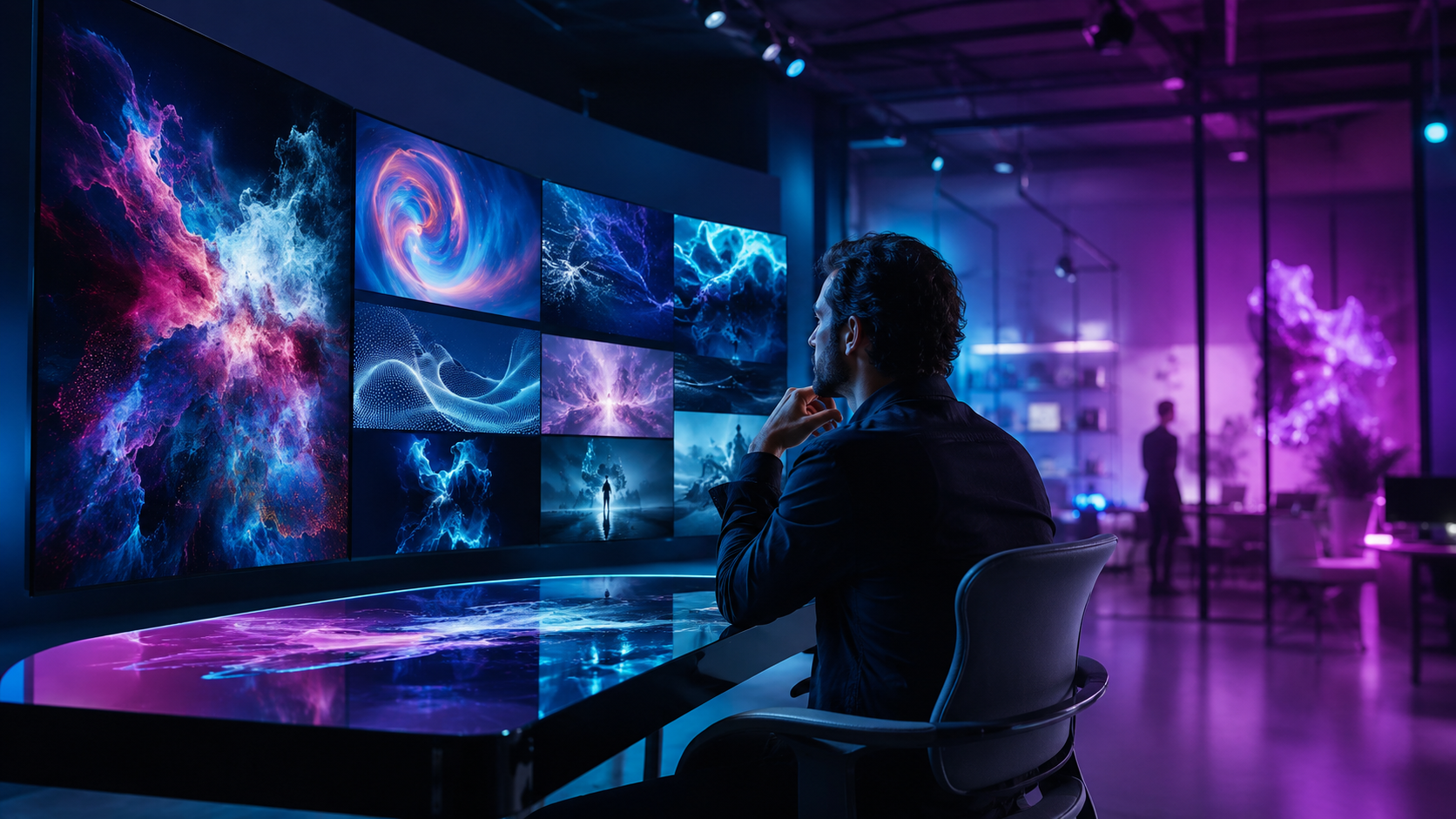
Modern AI image generation tools can now produce dozens of visual interpretations of a single scene in seconds. Instead of briefing an artist and waiting for sketches, a creative director can input a scene description, visual mood, camera angle, and lighting preference, then receive multiple options immediately. This doesn't replace artistic judgment—it accelerates the exploration phase.
Imagine you're concepting a 30-second luxury watch commercial. The creative brief calls for: "Elegant wrist movement, golden hour light, minimalist product focus, cinematic depth." An AI tool can generate 50 variations exploring different compositions, lighting temperatures, and background contexts. The director can instantly see which direction resonates, then refine from there. What might have taken a storyboard artist two days now takes two hours.
Script Refinement and Dialogue Optimization
AI tools are also entering the scriptwriting phase, though more subtly. These systems can analyze existing scripts for:
- Pacing and rhythm
- Dialogue naturalness
- Narrative structure clarity
- Emotional arc consistency
- Audience engagement signals based on word choice and sentence length
A copywriter drafts a 30-second voiceover. An AI system can suggest alternative phrasings, flag where the script might feel rushed, or highlight moments where the emotional beat might land harder with different word order. This is not ChatGPT writing your commercial—it's an intelligent editing partner that catches what the human brain might miss after 10 iterations.
Shot-Listing Automation
One of the most tedious pre-production tasks is shot-listing: the detailed breakdown of every angle, duration, and technical requirement for each scene. An AI system trained on thousands of commercials can suggest optimal shot sequences based on the storyboard, scene objectives, and production context. It won't replace a cinematographer's expertise, but it can propose a framework that saves hours of structural thinking.
Where Human Judgment Still Reigns
Here's what's crucial to understand: AI in pre-production is not about removing creative decisions—it's about removing busywork from creative decisions.
The director still chooses the final emotional tone. The copywriter still owns the brand voice. The production designer still determines the visual language. What changes is that these choices are made with better visibility, faster feedback loops, and more options to evaluate.
A creative team at a Singapore-based agency working on a regional brand campaign might use AI to:
- Generate 100 visual directions in two hours instead of briefing an artist for two weeks
- Test multiple script variations with focus groups before shooting, rather than discovering timing issues during production
- Build a comprehensive shot-list framework in one afternoon instead of across three planning meetings
The human creativity is still the decision-maker. AI is the accelerant.
The Production Advantage
When pre-production is streamlined, the actual shoot becomes more decisive. A director working from AI-assisted storyboards and shot-lists arrives on set with exceptional clarity about what they're capturing and why. Fewer creative decisions are made under time pressure. Fewer mistakes happen because contingency thinking happened earlier. The cinematographer has a stronger technical framework to improvise within.
Production companies like Glory Forest have begun integrating these tools into their pipelines—not to reduce team size, but to redeploy creative energy toward higher-order thinking: nuance, tone, brand authenticity, emotional depth.
The Real Opportunity
The honest take: not every studio or production company needs to adopt AI pre-production tools today. Many work beautifully with traditional methods. But the studios that do will notice something tangible—they'll complete more projects with the same resources. They'll have stronger concepts because they've evaluated more options. They'll ship faster.
For creative directors, this means more time spent on what you're actually good at: making taste-based decisions, building brand narratives, and pushing work toward excellence rather than wrestling with iteration logistics.
For production teams, it means entering the shoot phase with clearer vision and smoother collaboration.
For brands, it means shorter timelines from brief to final film—and that's always valuable.
Moving Forward
The pre-production phase is where good commercials separate from great ones. AI is not changing that truth. What it's changing is the speed and scale at which great thinking can happen before the camera rolls. The studios, directors, and teams that harness this thoughtfully will find they have more creative oxygen. That's the real win.
The storyboard isn't becoming less important. It's becoming faster, more iterative, and ultimately, more deliberate.