Inside the Creative Lab: How AI-Assisted Pre-Production Is Reshaping Commercial Filmmaking
Pre-production has always been the crucible where brilliant ideas become actionable plans. It's where a creative director's vision meets the producer's timeline, where a single line of dialogue can unlock an entire scene, and where every frame is sketched—sometimes a hundred times—before a camera ever rolls.
But pre-production is also where studios lose weeks and budgets bleed. Storyboarding iterations. Scriptwriting rewrites. Mood board revisions. Client presentations that demand new angles. The process is essential, yet it's traditionally been the most labour-intensive and time-consuming phase of commercial production.
Today, AI-assisted tools are not replacing this phase—they're accelerating it. And in Singapore's fast-paced commercial production landscape, where brands demand quick turnarounds and creative agencies juggle multiple campaigns simultaneously, the implications are profound.
The Pre-Production Bottleneck: Where Time Gets Lost
Before we talk about AI solutions, let's be honest about the challenge. A typical commercial shoot might take 2–3 days on set. The actual production might consume 50–100 hours of planning, scripting, storyboarding, mood boarding, and revisions.
Consider a real scenario: A brand wants a 30-second product spot. The agency's creative team develops a concept. The director has a vision. But the client needs options—three different narrative approaches, two different visual styles, four different endings. Each option requires a full storyboard, animatic, colour reference, and shot list.
Under traditional workflows, this could take weeks. The director sketches or hires an illustrator. Revisions come back. New angles are requested. A storyboard artist integrates feedback. Meanwhile, the production timeline is tightening, and pre-production is eating into the on-set schedule.
This is where efficiency matters—not because speed is inherently good, but because extra pre-production time means more creative refinement, fewer surprises on set, and ultimately better creative outcomes.
AI Tools Redefining the Storyboard Phase
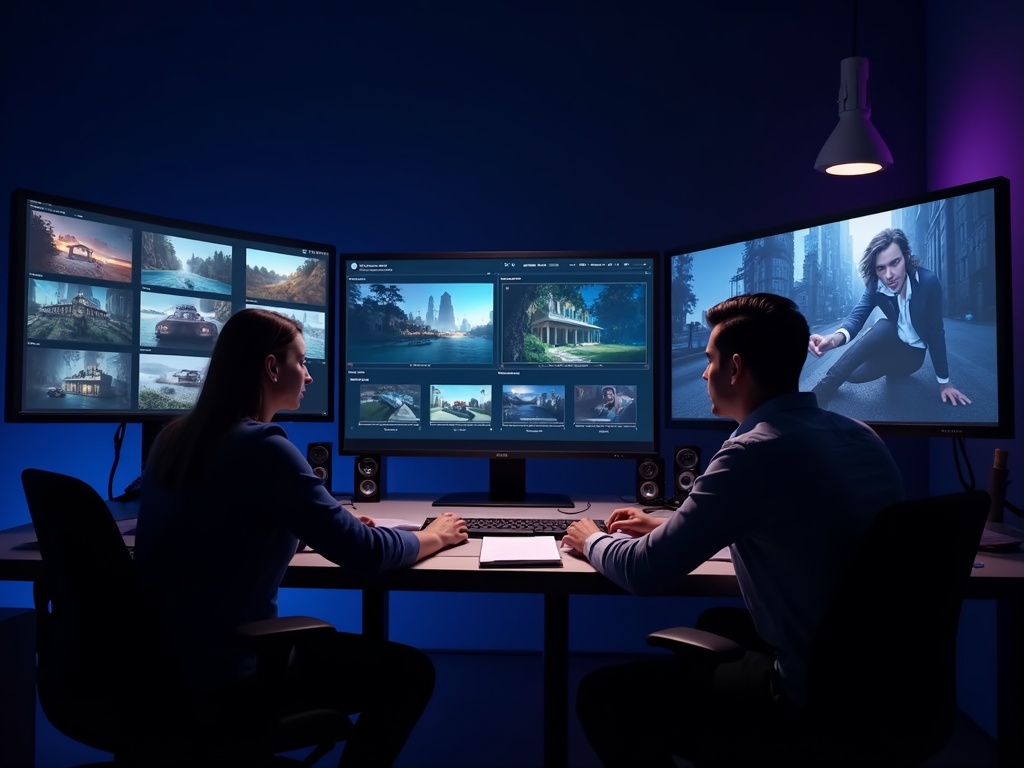
Modern AI-assisted storyboarding platforms allow directors and creative teams to visualize concepts in hours rather than days. These tools don't replace the director's eye—they amplify it.
Here's how this works in practice:
Rapid Conceptualization. A director describes a shot in natural language: "A close-up of hands assembling a product, warm backlighting, soft shadows, Japanese aesthetic." AI visualization tools can generate multiple interpretations instantly. The director reviews, refines, and iterates. What might have taken a storyboard artist an hour now takes minutes to explore multiple directions.
Animatic Generation. Rather than static storyboards, AI can help create low-fidelity animatics—rough animated sequences that show timing, pacing, and transition flow. This is invaluable for visualizing how a narrative unfolds, especially for commercials where pacing is everything.
Mood and Colour Exploration. Before shooting, creative teams can generate visual references in different colour grades, lighting conditions, and cinematic styles. A product can be photographed conceptually in warm, cool, dramatic, or minimalist palettes. This happens digitally and instantly, informing the gaffer and cinematographer before they step on set.
The Script and Narrative Layer
Scripting is equally transformed. AI-assisted writing tools can help generate multiple variations of a commercial's voiceover, headline, or dialogue based on brand voice and target emotion.
This doesn't mean AI writes the script. Rather, it generates options and variations that the creative director, copywriter, and brand team can evaluate and refine. For instance:
- A creative briefs the AI tool with the campaign message and target audience
- The tool generates 10 script variations, each hitting the brief differently
- The team selects the strongest, then uses AI to generate variations of that winning direction
- Final copywriting refinement happens with human judgment, brand sensitivity, and cultural nuance
In Singapore's multicultural market, where messaging must resonate across different communities and languages, this layered approach is particularly valuable. AI can handle volume and variation; humans handle context and authenticity.
The Real Value: Freed Creative Energy
The most underrated benefit of AI-assisted pre-production isn't speed—it's creative freedom.
When a director doesn't have to wait three days for storyboard revisions, they can explore more ideas. When a copywriter can generate script options in minutes rather than hours, they can focus on refining voice and emotion rather than grinding through rewrites. When a producer can see multiple visual directions simultaneously, they can make informed decisions about casting, location, and crew requirements faster.
This is especially valuable for commercial production, where creative teams often serve multiple clients simultaneously. A production company like Glory Forest working with 5–10 active campaigns can use AI pre-production tools to maintain momentum across projects without sacrificing creative depth on any single brief.
What AI-Assisted Pre-Production Cannot Do
It's important to be clear: AI pre-production tools are amplifiers, not replacements.
They cannot:
- Understand cultural nuance and brand positioning intuitively
- Make emotional judgment calls about what will genuinely resonate
- Replace the director's unique visual voice
- Ensure compliance with brand guidelines or client sensitivities
- Synthesize feedback from multiple stakeholders into cohesive creative direction
These remain fundamentally human tasks. What AI does is remove the busywork that delays these human decisions.
The Workflow in Practice
Here's how an optimized AI-assisted pre-production workflow looks:
- Creative Brief. Team aligns on message, audience, and emotional intent
- Rapid Visualization. AI generates storyboard concepts, moodboards, and color explorations
- Director Selection. Director selects strongest directions, requests variations
- Animatic and Timing. Low-fidelity animated sequences are generated to test pacing
- Script Refinement. Multiple script variations generated; team selects and polishes
- Final Breakdown. Armed with AI-assisted references, producer creates shot list, location requirements, and crew briefings
- Set Preparation. The actual production day is more efficient because pre-visualization has been thorough
Looking Forward
The creative industry has always adopted tools that expand human capability. The camera replaced the painting. Digital editing replaced the razor blade. Motion capture expanded what animators could express. AI-assisted pre-production is another step in that evolution.
For commercial directors and creative teams in Singapore, the question isn't whether to use these tools—it's how to integrate them thoughtfully into existing workflows. The studios that thrive in the next phase of commercial production will be those that use AI to create space for human creativity to flourish, not replace it.
The shoot day hasn't changed. A camera still captures light. A crew still collaborates. But everything that happens before the camera rolls is becoming smarter, faster, and more exploratory. And that changes what's possible on set.